


Chasing The Silver King Along North East Florida’s Coast
Tarpon fishing in Northeast Florida offers a truly unforgettable experience for anglers chasing one of the ocean’s most impressive and challenging game fish. Jacksonville’s coast during the summer months offers calm seas and clean ocean water, creating an ideal environment to target big migration tarpon, especially during the menhaden, or pogie, migration.
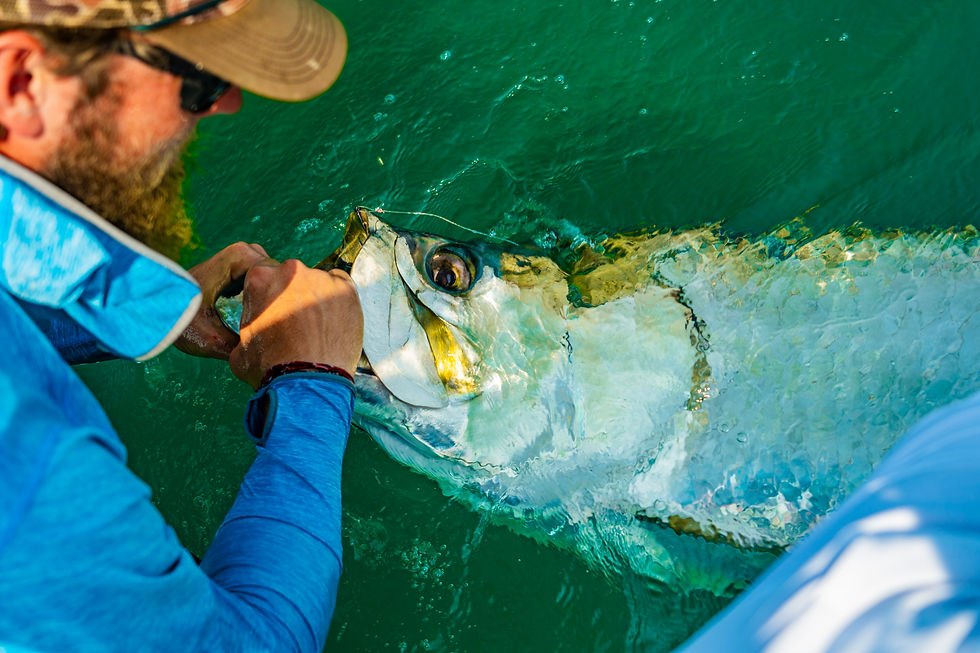
Understanding Tarpon Behavior During the Menhaden Migration
The menhaden migration is a key event for us tarpon guides and anglers in Northeast Florida. Menhaden, (we call them pogies around here), are small baitfish that move along the coast in large (often times huge, multiple acre sized) schools. Tarpon follow these schools closely; “pogies” are high in nutritional value for tarpon on their migration.
Timing: Summer-time. When the humidity and heat is relentless, you know they’re swimming north!
Location: Tarpon patrol both inshore and nearshore waters looking for pogie schools.
Feeding habits: Tarpon feed uber-aggressively. Often times coming clean out of the water as they ambush these schools of baitfish.
Knowing when and where the pogies are moving helps you position yourself for the best chances at landing a trophy tarpon.
Choosing Between Fly Rods and Spinning Rods
Both fly rods and spinning rods have advantages when targeting tarpon here on the coast. Your choice depends on your style, conditions, and personal preference.
Fly Rods
Fly fishing for tarpon is like learning to drive a manual car. It’s a challenging pursuit, but a rewarding one. It requires skill and patience but offers a very unique connection to the fish. You “earn it” to say the least.
Rod size: Ideally, 11 and 12wts.
Line and leader: A weight-forward floating line paired with a strong, abrasion-resistant leader works best.
Flies: Large baitfish or crab patterns that mimic menhaden and pass crabs are effective.
Techniques: Fly fishing for tarpon is all about sight fishing. See the fish, cast to the fish. Like a quarterback to a reciever, “throw to where he’s going to be, not where he currently is.”
Fly fishing demands stealth and precision but can make landing a big tarpon feel like a true accomplishment.
Spinning Rods
Spinning rods offer versatility and power, especially when casting live bait rigs or artificial lures.
Rod specifications: A heavy spinning rod around 7 to 8 feet long with a fast action is ideal. You don’t want a “broomstick,” or a rod with no forgiveness in it, as tarpon can make sudden lurches and runs and break off. A rod with a strong backbone and a little give in the top two feet is ideal.
Reel and line: Use a strong reel with a smooth drag system and 30-50 lb braided line paired with a fluorocarbon leader.
Lures and bait: Large soft plastics, jigs, and live or cut bait such as menhaden work well.
Techniques: Cast near schools of menhaden or around structure where tarpon hunt. Retrieve lures with varied speeds to trigger strikes.
Spinning gear allows you to cover more water and handle the power of big tarpon with confidence.

Reading the Water and Locating Tarpon
Success in tarpon fishing depends on your ability to read the water and find the fish.
Look for rolling tarpon: Tarpon often surface to breathe, creating a rolling or splashing effect.
Watch bird activity: Birds diving into the water usually indicate baitfish schools, which attract tarpon.
Check water clarity and temperature: Tarpon prefer clear, warm water typically between 78°F and 85°F.
Techniques for Calm Seas and Clear Water
Northeast Florida’s calm seas and clear water create both opportunities and challenges.
Stealth is key: Tarpon can see anglers and boats easily in clear water. Approach slowly and avoid sudden movements.
Use polarized sunglasses: These reduce glare and help spot tarpon and baitfish below the surface.
Present natural-looking bait or flies: In clear water, tarpon are more cautious. Match the hatch by using flies or lures that closely resemble menhaden.
Adjust your casting distance: Cast beyond the tarpon and retrieve toward them to avoid spooking the fish.
These increase your chances of fooling wary tarpon in pristine conditions.
Handling Big Tarpon Safely and Effectively
The most important part. Take care of the fish and they’ll take care of us for years to come. Landing a big tarpon requires strength, skill, and respect for the fish.
Use appropriate tackle: Heavy rods, strong lines, and reliable reels prevent break-offs. It also helps get the fish in quick without tiring itself out too much. Get the fish in, revive and let it have enough stamina to swim away and generate oxygen through it’s gills.
Keep the line tight: Tarpon use powerful head shakes and jumps to throw hooks. Maintain steady pressure without snapping the line.
Be patient, yet confident: Tarpon fights can last 30 minutes up to an hour or more. You must maintain strong pressure on that fish, the harder you pull, the sooner that fish can be brought boatside, released, and allowed to swim away and fight another day.
Practice catch and release: Tarpon are a protected species in Florida. Handle them gently, avoid lifting by the jaw, and release quickly to ensure survival. Don’t take them out of the water, and don’t release them until they’re showing strong tail movements.
Respecting the fish and following ethical practices preserves this incredible fishery for future anglers.
Tarpon are the greatest fish that swim along our coast. If I could chase one fish the rest of my life, it would be a tarpon. Nothing compares to their initial explosive eat, that first (or second or third or tenth) jump out of the water, and their relentless strength. I think we could all learn a little something from a tarpon- how to be resiliently strong and not let your spirit be broken.
If you’re interested in chasing them with me, give me a call!


Comments